Smell and museums
June 21, 2026
Smell is a sense we often underestimate, and that is rarely considered in museums, where the priority tends to be the visual. Despite being closely linked to emotion and memory, smell has been relegated to the background in museographic practice, except perhaps in cases such as science or culinary museums. However, a multisensory environment can add significant value to the museum visit.
This is demonstrated by several recent experiences mentioned in this article, which aims to explore the potential of smell as an integral part of the museum space.
- The sensory power of smell
- Scent as a cultural enhancer
- Museums that go beyond the visual
- Smell and museums: challenges and considerations
The sensory power of smell
The so-called "Proustian effect" describes the phenomenon by which a sensory stimulus, especially a smell or taste, can vividly transport us to a memory. Its name comes from the writer Marcel Proust, who described it in his novel In Search of Lost Time, when the protagonist recalls an experience after tasting a madeleine with tea.
The association between the senses and memory is not only a literary idea. It is common to associate certain perfumes or smells with memories we thought were forgotten. Why does smell have such an impact on us? Neuroscientist Rachel Herz states that smell is the only sense directly connected to the brain’s emotional memory and learning centres (Skins, J., 2022).
In short, although smell is often overlooked, we experience it constantly, and its role is more significant than we usually acknowledge. Given its importance, it is no surprise that sectors like hospitality and retail have used scent for years as a branding tool.
Thinking about smells this way opens new possibilities for their application in various fields. In the cultural sector, its potential can also be explored. This leads us to ask new questions, such as: What role do aromas play in culture? How can smell enrich the museum experience?
Scent as a cultural enhancer
What does the past smell like? Unfortunately, the difficulty of capturing smells has meant that their histories have often been lost over time. The ODEUROPA project set out to research this issue. One result was the creation of a collection of historical scents, which includes, for example, a recreation of the smell of the Battle of Waterloo. The research also helped develop methodologies that allow cultural institutions to incorporate smell into their collections.
Thus, scent can be understood not only as an enhancer of the cultural experience but as an element in its own right, worth preserving just like tangible heritage.
Museums that go beyond the visual
Although it may seem like an unusual idea, incorporating smell into museums is more solid than it appears. Some recent exhibitions at prestigious institutions have already taken this path, showing that appealing to the senses—beyond sight—is not only possible but relevant in today's museographic context.
In Germany, the Ulm Museum offered the exhibition Follow Your Nose (2022), where the scents that would emanate from some aspects of artworks were recreated. Also in 2022, olfactory tours began at the Louvre in Paris, this time related to its still-life collection.
At the Prado Museum, several interventions have already included scent in the galleries. Alejandro Vergara, one of the curators of The Essence of a painting. An olfactory exhibition. (2022) explained that the idea of organising an exhibition with aromas came as a way to draw attention to certain rooms in the museum. In this exhibition, a digital interface was used that allowed visitors to select some aspects of the painting and release a recreation of its smell.
Smell and museums: challenges and considerations
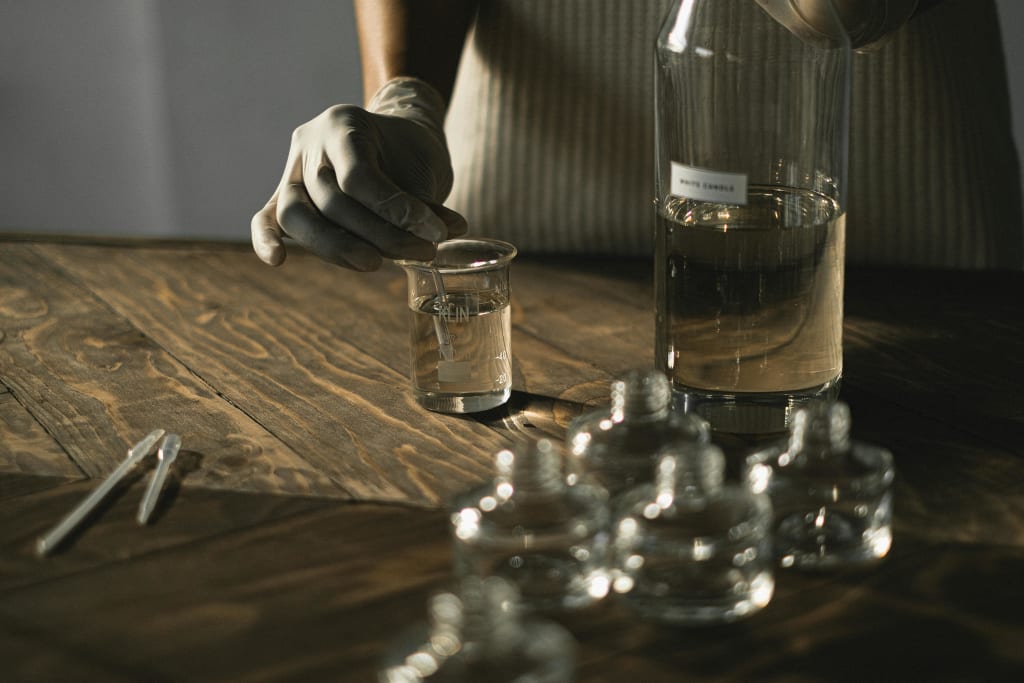
Incorporating smell into exhibitions requires interdisciplinary collaboration between various professionals: perfumers, curators, conservators, engineers… This is because there are many factors to consider when implementing scents in a museum setting, and it is essential to ensure both the safety of visitors and the conservation of the artworks.
Other factors include the visitor experience, the way interaction with scents occurs, and curatorship, which in this case involves an additional dimension: that of smell.
Working with scent in museums means thinking not only about fragrance as content, but also about its method of presentation, dosage, and integration into the exhibition narrative. All of this makes olfactory design a complex component, but one with enormous potential to enrich the museum experience.
BIBLIOGRAPHY
Academia del Perfume Fundación (2022): “Una exposición olfativa” at the Museo del Prado, by Alejandro Vergara and Gregorio Sola, [Online video]. Available at: https://youtu.be/2xaBDclNl9c [Accessed: April 23, 2026]
European Commission (2024): Rediscovering the scents of the past. European Commission, September 12. Available at: https://projects.research-and-innovation.ec.europa.eu/es/projects/success-stories/all/redescubrir-los-olores-del-pasado
Museo del Prado (2022): The Museo Nacional del Prado proposes for the first time an olfactory relationship with painting. Museo del Prado, April 4. Available at: https://www.museodelprado.es/actualidad/noticia/el-museo-nacional-del-prado-propone-por-primera/d47da72b-b4e2-414b-e493-719abe9e10cc [Accessed: April 23, 2026]
Museo del Prado (2023): The Museo Nacional del Prado proposes a new olfactory relationship with its Permanent Collection. Museo del Prado, March 16. Available at: https://www.museodelprado.es/actualidad/noticia/el-museo-nacional-del-prado-propone-una-nueva/84773c32-d8ed-30a0-f80a-5b058945d373
Skins, J. (2022): What is olfactory tourism and why does its future smell like success?. National Geographic, December 30. Available at: https://www.nationalgeographic.es/viaje-y-aventuras/2022/12/que-es-el-turismo-olfativo-y-por-que-su-futuro-huele-a-exito [Accessed: April 23, 2026]